Every trunk you see is covered in a workforce we only just learned about.
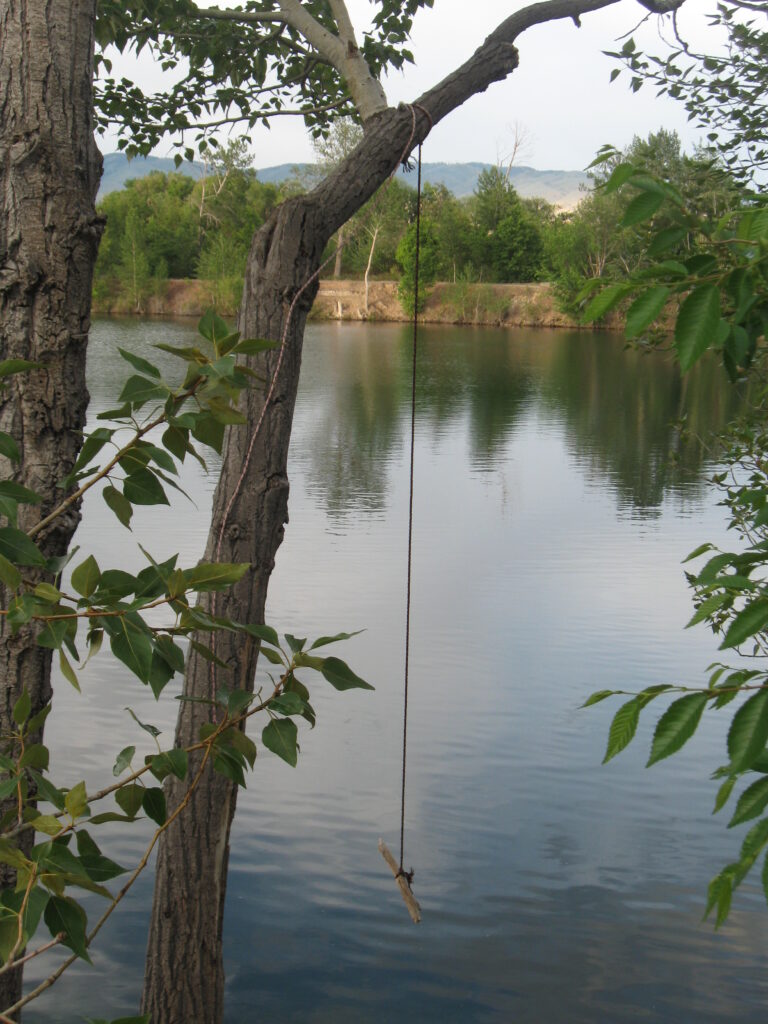
Last year, scientists announced a discovery that quietly rewrote part of what we know about trees. It wasn’t about growth rings or root systems or anything visible to the eye. It was about bark—and the billions of microscopic lives unfolding across every trunk in the world.
Microbes living in tree bark, it turns out, are pulling methane out of the atmosphere. Not a little, either. The research team, led by biogeochemist Vincent Gauci at the University of Birmingham, estimates that trees remove between 25 and 50 million metric tons of methane from the air every year—a gas roughly 80 times more potent than carbon dioxide over a twenty-year span (Gauci et al., Nature, 2024).
Here is the part that stopped me cold: this was happening the entire time. Through every forest walk you’ve ever taken, every afternoon spent reading beneath an oak, every winter morning the bare branches stood against gray sky—the trees were doing this work. Nobody knew. Nobody needed to know. The trees didn’t wait for our understanding or approval.
As a kid, I spent a lot of time climbing trees. Today, as a photographer, I spend a lot of time in Nature. This past August, I spent four days on trails in Glacier National Park. Every day, I wake to see the giant Ponderosa Pine in my front yard. I had no idea the trees were doing this work. Knowing now, I will never see a tree or touch the rough (or smooth!) bark the same old offhanded way again.
The Discovery That Overturned an Assumption
For years, scientists actually believed the opposite. Trees in wetlands were known to emit methane from their trunks—acting, as one researcher put it, like “passive chimneys” venting gases from oxygen-starved soil below. When Gauci’s team began measuring methane exchange along tree trunks, they found something surprising near the base: emissions, yes. But a few meters up, the flow reversed. The bark was absorbing methane from the surrounding air (Popular Science, 2024).
The agents responsible are called methanotrophs—bacteria that consume methane for energy. To estimate their global impact, the researchers became the first to quantify the total surface area of tree bark on Earth using laser scanning: roughly 41 million square kilometers, about the combined size of North and South America (Science News, 2026).
Follow-up research has found the bark microbes don’t stop at methane. A study published in Science in January 2026 showed they also draw hydrogen and carbon monoxide out of the surrounding air—gases that exist at vanishingly small concentrations, mere parts per million or billion, yet consumed relentlessly across six trillion microbes per square meter of bark (Jeffrey et al., Science, 2026).
Add it all up, and the researchers calculate that trees are about ten percent better for the climate than we previously understood. Ten percent of quiet, unrecognized service, performed continuously, without applause.
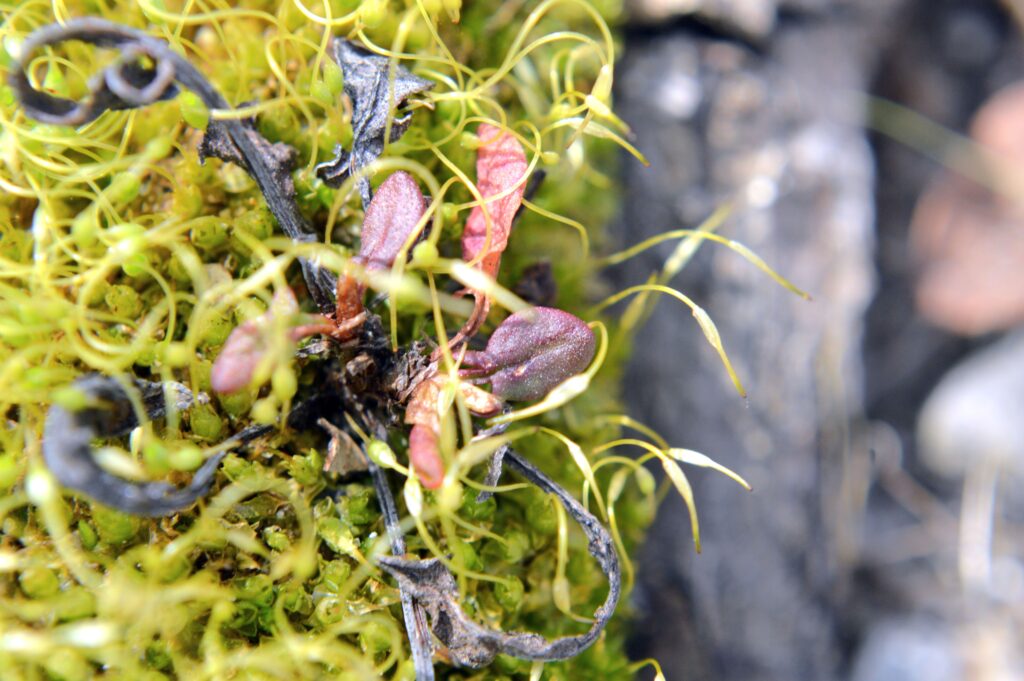
Why Wonder Matters
You might reasonably ask: what does this have to do with me? Unless you’re a climate scientist, methane flux measurements don’t change your Tuesday.
But consider what psychologists have learned about awe.
Research from the Greater Good Science Center at UC Berkeley and others has shown that experiences of awe—encountering something vast that exceeds our current understanding—do measurable things to us. They lower stress markers and inflammation. They soften the ego in what researchers call the “small self” effect: standing before something enormous, our personal worries shrink to their proper size. They increase feelings of connection—to other people, to the natural world, to something larger than ourselves (Greater Good Science Center, UC Berkeley).
Awe requires novelty, scale, or mystery. And here is the gift of this discovery: it transforms every tree you already know into a source of all three. The maple on your corner, the pines along your favorite trail, the lone oak in a parking lot island—all of them are covered in an invisible workforce cycling gases through a chemistry we only just learned to measure.
You don’t have to travel to a cathedral or a canyon. The vast is vertical, rooted, standing in your neighborhood, six trillion microbes to the square meter.
The Deeper Resonance
There’s something else here, and it speaks to why I spend my life photographing restful views.
So much of what restores us in nature is given without demand. The shade of a tree asks nothing. The humidity rising off a forest asks nothing. Now we know the air-cleaning happens the same way—continuously, invisibly, and for billions of years before anyone thought to look.
We live nested inside generous systems we barely comprehend. Sometimes knowing that is itself a comfort. The world, at its quietest and smallest, is still taking care of things.
The next time you press your palm against bark—rough or smooth, furrowed or papery—remember what you’re touching. Not just wood. A living surface, an entire continent’s worth of unseen collaboration, holding the sky steady in its own small way.
It was doing this yesterday. It will do it tomorrow. And today, you know.
Bring the View Home
The forest’s quiet generosity doesn’t have to stay behind on the trail. Our window-overlay prints place restful natural views where you’ll see them every day—a tree-filled horizon framed by your own window, no matter where you live. Explore the collection and find the view that helps you create your restful space.

Still Waters, one of our window-overlay prints, bringing a restful riverside view indoors. Click photo to purchase print.
References
- Gauci, V., Pangala, S.R., Shenkin, A., Barba, J., Bastviken, D., Figueiredo, V., Gomez, C., Enrich-Prast, A., Sayer, E., Stauffer, T., Welch, B., Elias, D., McNamara, N., Allen, M. & Malhi, Y. (2024). Global atmospheric methane uptake by upland tree woody surfaces. Nature, 631(8022), 796–800. DOI: 10.1038/s41586-024-07592-w
- Kruse, H., et al. (2024). “Trees’ methane absorption boosts climate protection.” Chemical & Engineering News.
- Popular Science (2024). “Tree bark demonstrates an unexpected climate superpower.”
- Jeffrey, L., et al. (2026). “Bark microbes consume atmospheric trace gases.” Science.
- Science News (2026). “Hidden tree bark microbes munch on important climate gases.”
- UC Berkeley Greater Good Science Center. “Why Awe Is Such an Important Emotion.”